


Would you choose a coffee for its uncommon variety, distinctive processing or genuinely small harvest lot? In Australia, “limited release” is most useful when a roaster explains the lot, producer, process and what makes that batch finite. Our article on small-batch roasted coffee beans explains one part of that picture. Small-batch roasting alone does not establish that a coffee is a limited release.
For buyers, limited release coffees should offer enough detail to judge rarity and cup style, not just scarce-sounding language. The coffees below have product information about their varieties, processing, origins, producers, roasts and brewing methods. Their descriptions do not state current inventory or finite batch counts, so check availability before ordering. World Coffee Research’s variety catalogue offers useful context on named coffee varieties, which are distinct from a release’s batch size.
What makes a coffee a limited release?
A rare variety and a limited release are related, but they are not the same thing. A variety describes the coffee plant; processing describes how the harvested cherries are handled. A release refers to the coffee made available to buyers, so a rare cultivar alone does not establish that a particular batch is small or time-limited.
Before buying, look for a named producer and farm, country or region, variety, process, roast and recommended brew methods. These details help you understand the coffee and assess its provenance. An ICO-hosted specialty coffee paper lists details such as origin, variety, producer and processing among specialty coffee descriptors, including traceability.
Processing can influence the cup, but it does not guarantee a particular flavour. The Specialty Coffee Association’s discussion of coffee fermentation describes how factors such as variety and processing conditions interact. Treat tasting notes as a useful guide, then select a roast and brew method that suit your preferences.
Five rare coffee options to consider
These five coffees are distinguished by their stated varieties or processing methods, with useful producer and brewing details. The product descriptions do not confirm current stock, batch quantities, release dates or prices. Check the product pages for current purchasing details before making your choice.
| Rank and coffee | Documented rarity signal | Process and roast | Suggested brewing |
|---|---|---|---|
| 1. Pink Bourbon Natural Coffee Beans | Described as a sought-after, limited variety | Natural anaerobic fermentation; medium-light Omni-Roast | Filter, long black or espresso |
| 2. Gesha Fermented Coffee Beans | Gesha is described as rare; fermented Gesha as rarer still | Extended fermentation and washed; medium-light Omni-Roast | Filter, cold brew, espresso or long black |
| 3. Gesha Natural Coffee Beans | Gesha is described as among the world’s rarest varieties | Natural anaerobic fermentation; medium-light Omni-Roast | Filter, long black or espresso |
| 4. Yellow Colombia Natural Coffee Beans | Described as a rare variety and find | Natural anaerobic fermentation; medium Omni-Roast | Espresso, filter or plunger |
| 5. Colombia Triple Fermented Coffee Beans | Three-phase fermentation at this level is described as exceptionally rare | Three-phase extended fermentation; medium Omni-Roast | Espresso, filter, plunger or cold brew |
1. Pink Bourbon Natural Coffee Beans
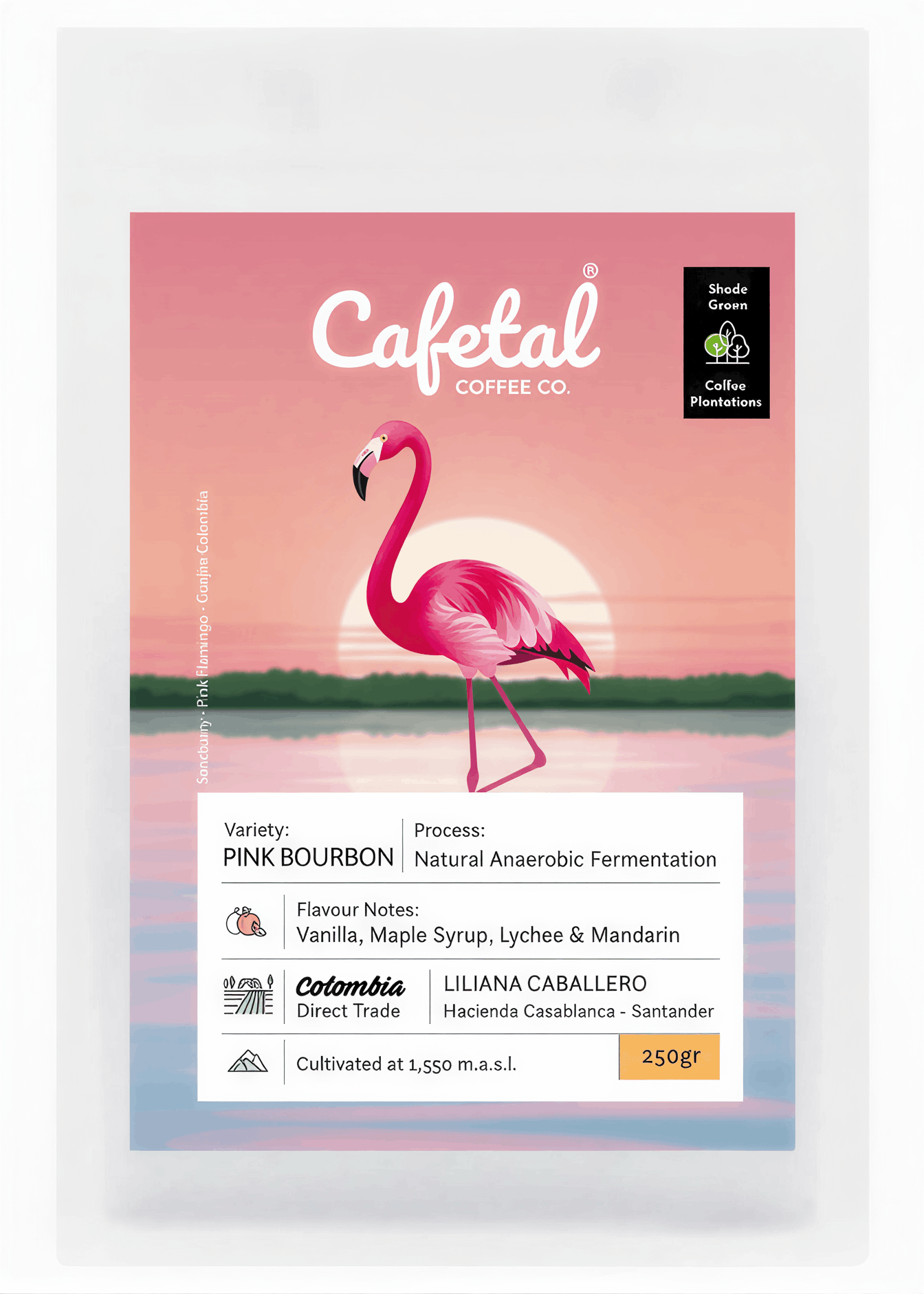
Best for: You enjoy aromatic, fruit-forward coffee and want a medium-light roast for filter, long black or espresso.
Our Pink Bourbon Natural Coffee Beans come from Liliana Caballero at Hacienda Casablanca in Santander, Colombia. The coffee undergoes natural anaerobic fermentation and is roasted in Adelaide on a medium-light Omni-Roast profile. Its described notes include vanilla, maple syrup, lychee and mandarin.
Pros
- The product description identifies the producer, farm, region, elevation and process, giving you concrete origin details.
- Its suggested brewing methods include filter, long black and espresso.
- It is explicitly described as a sought-after and limited variety.
Cons
- Its fruit-forward flavour notes may not suit you if you prefer a restrained, traditional cup.
2. Gesha Fermented Coffee Beans
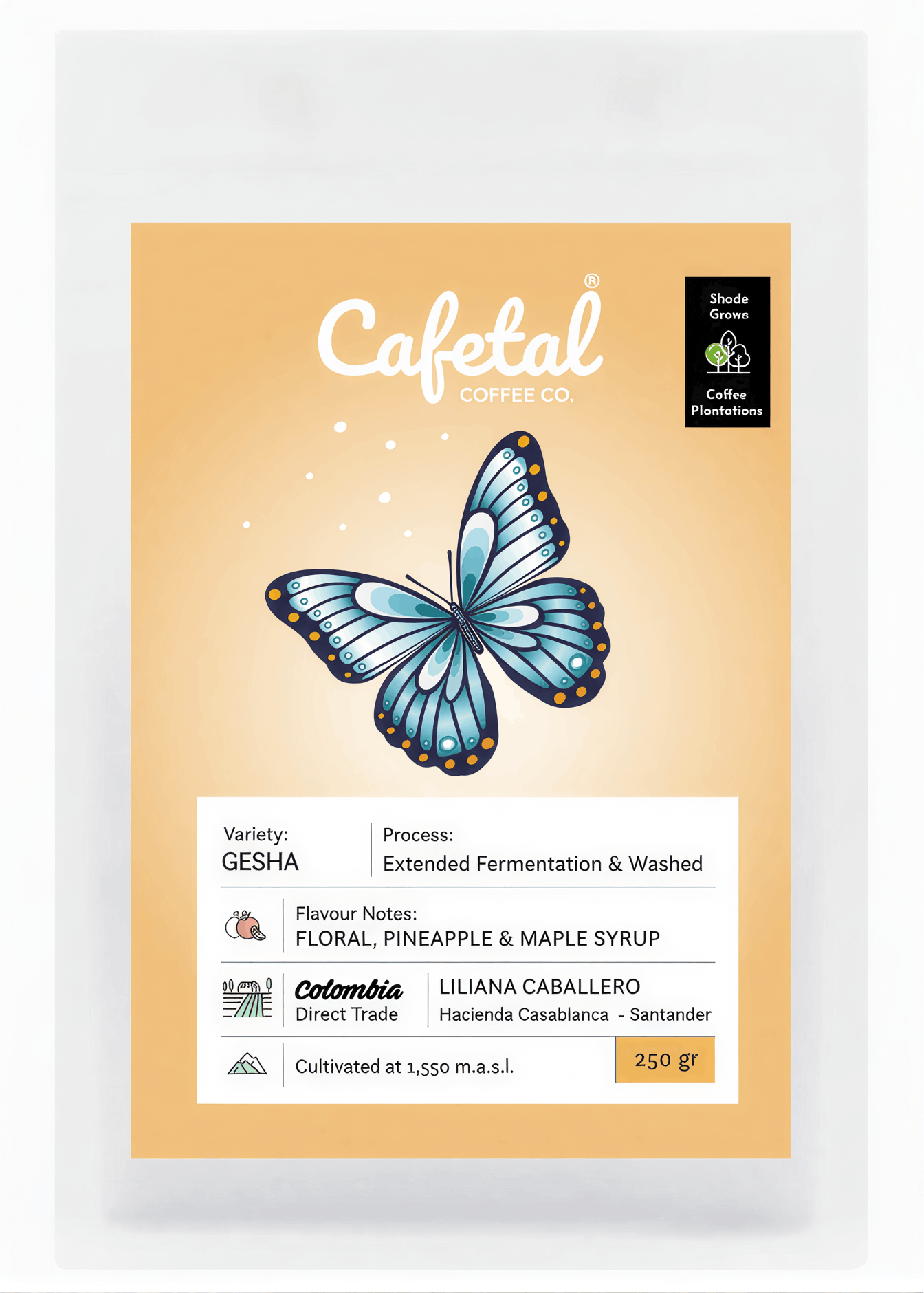
Best for: You want a floral, bright coffee with several supported brewing options, including filter and cold brew.
Our Gesha Fermented Coffee Beans are sourced from Liliana Caballero at Hacienda Casablanca in Santander. Extended fermentation and washed processing are used, followed by a medium-light Omni-Roast in Adelaide. The published flavour profile includes floral notes, pineapple and maple syrup.
Pros
- The description provides producer, farm, region and elevation details.
- It specifies filter, cold brew, espresso and long black as suitable methods.
- The product description calls Gesha rare and fermented Gesha rarer still.
Cons
- Its bright pineapple acidity and floral character may be less suitable if you prefer a low-acid, less aromatic cup.
3. Gesha Natural Coffee Beans
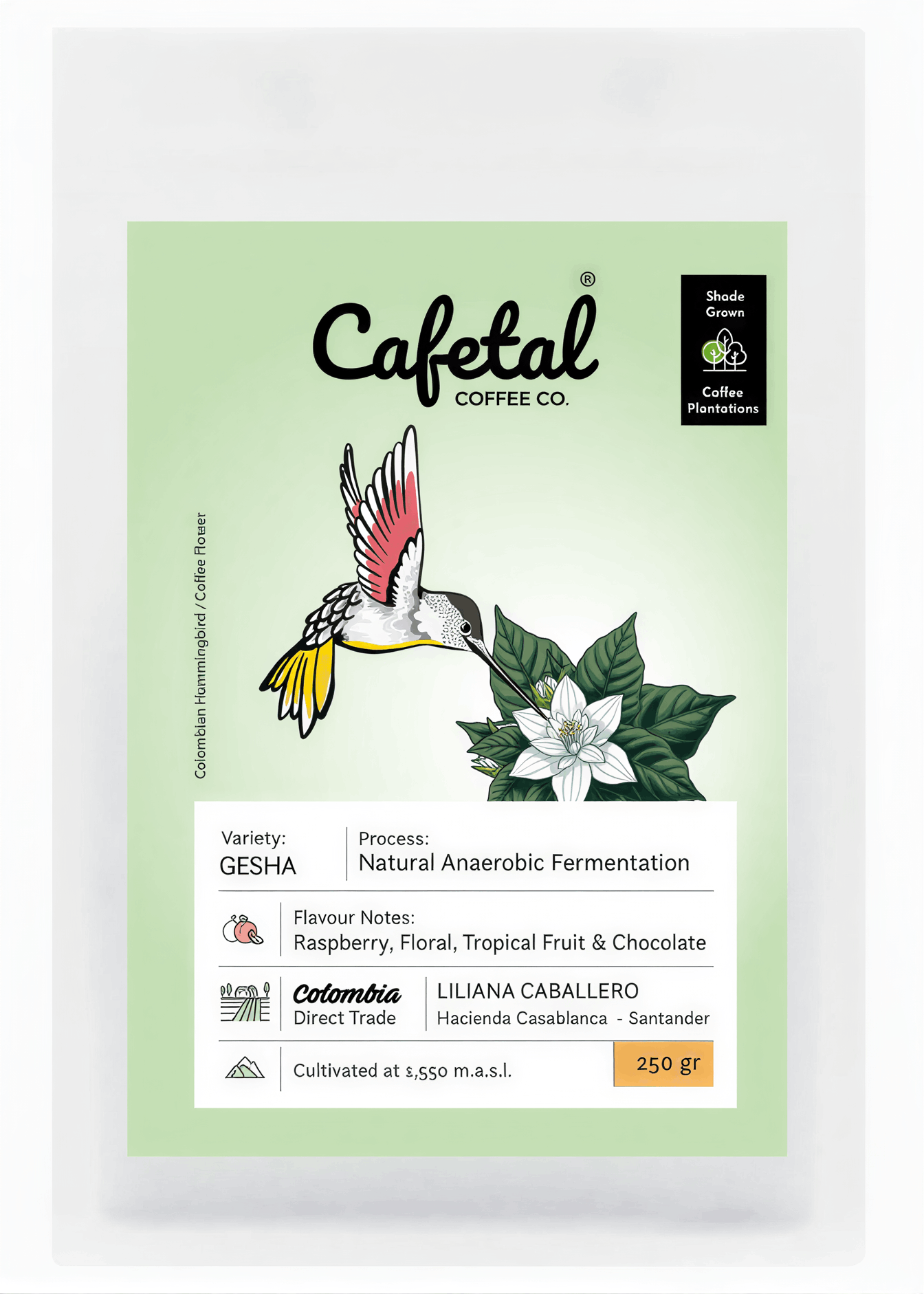
Best for: You enjoy floral and fruit notes and usually brew filter coffee or a long black.
Our Gesha Natural Coffee Beans are sourced from Liliana Caballero at Hacienda Casablanca in Santander, Colombia. Natural anaerobic fermentation and a medium-light Omni-Roast are used. The described cup combines raspberry, floral and tropical fruit notes with chocolate, and the product is recommended for filter, long black or espresso.
Pros
- The producer, farm, region and elevation are specified.
- The product page gives a clear process, roast profile, flavour description and brewing guidance.
- Gesha is described as one of the rarest and most sought-after varieties.
Cons
- The expressive fruit and floral notes may not fit your preference if you favour a more restrained profile.
4. Yellow Colombia Natural Coffee Beans
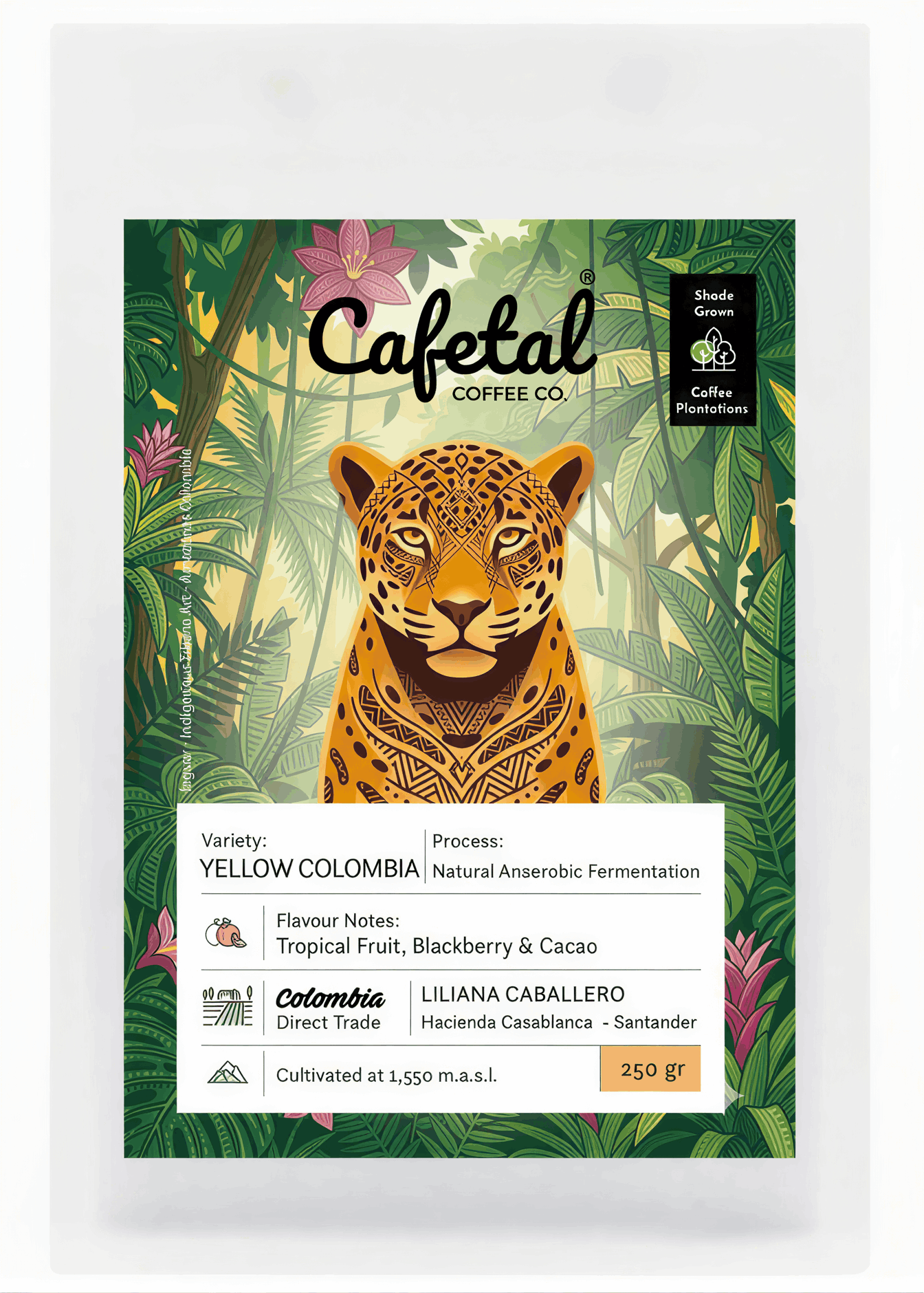
Best for: You want a medium Omni-Roast with fruit-forward notes and the flexibility to brew espresso, filter or plunger coffee.
Our Yellow Colombia Natural Coffee Beans come from Liliana Caballero at Hacienda Casablanca in Santander. The coffee is described as a rare variety and is processed using natural anaerobic fermentation. Its medium Omni-Roast is intended for espresso, filter and plunger, with tasting notes of tropical fruit, blackberry and cacao.
Pros
- The product details identify its producer, farm, region, elevation and harvest season.
- The medium Omni-Roast and three listed brew methods offer practical flexibility.
- The product page describes the variety as a rare find.
Cons
- The tropical fruit and blackberry profile may be less appealing if you prefer a classic, less fruit-forward cup.
5. Colombia Triple Fermented Coffee Beans
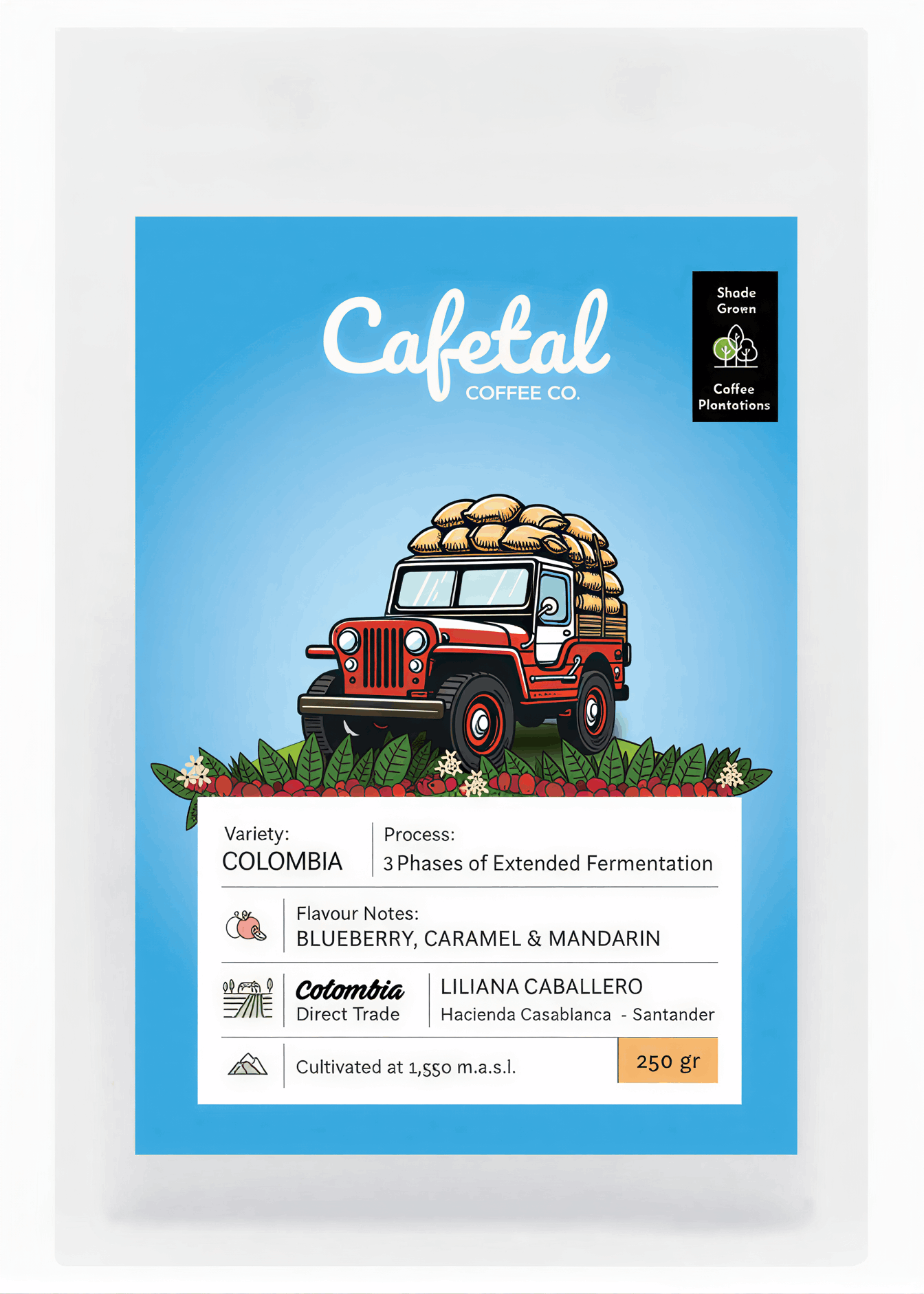
Best for: You want to explore a distinctive fermentation process and brew the same coffee using different methods.
Our Colombia Triple Fermented Coffee Beans are sourced from Liliana Caballero at Hacienda Casablanca in Santander. The Colombia variety undergoes three-phase extended fermentation, followed by a medium Omni-Roast. The described flavour profile includes blueberry, caramel and mandarin, and the product is recommended for espresso, filter, plunger or cold brew.
Pros
- The three-phase process is described in detail, alongside the producer, farm, region and elevation.
- The Omni-Roast is recommended for all listed brewing methods.
- The product description identifies this level of controlled triple fermentation as exceptionally rare.
Cons
- The experimental, layered profile may not be your preference if you want a more familiar, restrained cup.
How to choose and check availability
Start with the cup you want. Pink Bourbon and both Gesha options have medium-light Omni-Roasts, while Yellow Colombia and Colombia Triple Fermented use medium Omni-Roasts. If you use a specific brew method, check the product guidance rather than assuming every coffee suits every preparation.
Next, compare the documented process and origin. Natural anaerobic fermentation appears in the Pink Bourbon, Gesha Natural and Yellow Colombia descriptions. The fermented Gesha is described as extended fermentation and washed, while Colombia Triple Fermented uses a three-phase extended process. Our overview of the best specialty coffee beans in Australia provides broader context if you are comparing beyond rare varieties.
Finally, confirm whether a particular coffee is currently available and whether the seller identifies a finite lot or release period. A rare variety, distinctive process or small-batch roast does not, by itself, confirm a limited quantity. For more on the relationship between processing and coffee quality, consult the Specialty Coffee Association’s research-based discussion cited above.
Choose by cup profile and verified release details
The clearest options here pair distinctive varieties or processing with useful origin, roast and brew information. Compare those details with your preferences, then confirm current availability and any stated batch limits before ordering. A rare specialty coffee is most rewarding when its flavour and brewing guidance suit the cup you want.
Explore Colombian specialty coffees
If a rare variety or distinctive process has caught your interest, choose a coffee with clear origin information and brewing guidance that fits your routine. We roast in small batches in our Adelaide roastery, using in-house-developed roasting profiles and fresh-to-order production.

We source traceable Colombian coffees through direct producer relationships, with options across espresso, Omni-Roast and filter categories. Our online coffee business ships Australia-wide. You can also subscribe to our mailing list for early access to new single origins, direct-trade stories and subscriber-only releases. Browse our specialty coffee beans and select an option that suits your preferred flavour profile and brew method.
Frequently Asked Questions
What makes a coffee a limited release?
A limited release is a coffee offered as a finite or restricted batch, rather than simply a rare variety. Look for clear details about the lot, quantity or release period.
Does a rare coffee variety mean the release is limited?
No. A variety describes the coffee plant, while release size concerns how much coffee is offered. Check the seller’s details for batch or availability information.
How should I choose between natural and washed processing?
Compare the product’s stated flavour notes and brew guidance, then choose the profile that suits your preferences. Processing can influence the cup, but it does not guarantee a specific flavour.
Are these coffees currently available in Australia?
The product descriptions establish their origins, processes and brewing guidance, but do not confirm current stock. Check each product page for availability before ordering.
How can I hear about new coffee releases?
You can subscribe to our mailing list for early access to new single origins, direct-trade stories and subscriber-only releases. This does not mean every limited coffee is available exclusively to subscribers.


